



Stablising Stablecoin Risks
-
- 0 Rating
- 0 Reviews
- 4 Students Enrolled
Stablising Stablecoin Risks
A view on stablecoin depeg risk, cross venue discrepancy and insights from DEX metrics.
-
- 0 Rating
- 0 Reviews
- 4 Students Enrolled
Requirements
- Blockchain course
General Overview
Description
This talk introduces an early warning model for stablecoin risk onchain. Using onchain records of activity on various major stablecoin platforms such as Curve, Uniswap or AAVE, and onchain oracle data, we create a continuously updated hourly dataset of features relevant to stablecoin peg stability. We further use functional analysis to decompose Uniswap's dynamic liquidity curve into interpretable low rank signal relevant to endogenous, transient depeg risk.
Using this dataset we train two complementary models:
- a ML classifier, fast and interpretable, for simple depeg early warning alert
- a NN forecasting model for full distributional. prediction of the stablecoin's future price.
We show these models are complementary and provide a comprehensive view of the future stablecoin price, especially under stress.
Courses that include this CL

Recommended for you

Meet the instructors !
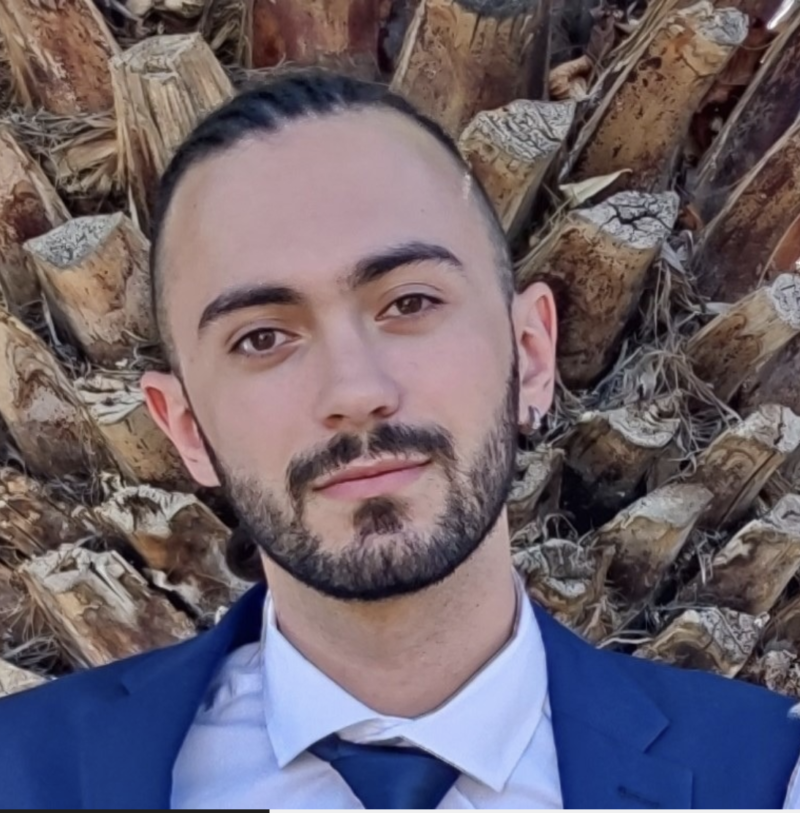

Wolfgang Karl HÄRDLE attained his Dr. rer. nat. in Mathematics at Universität Heidelberg in 1982 and in 1988 his habilitation at Universität Bonn. He is Ladislaus von Bortkiewicz Professor of Statistics at Humboldt-Universität zu Berlin and the director of the Sino German Graduate School (洪堡大学 + 厦门大学) IRTG1792 on “High dimensional non stationary time series analysis”. He directs IDA Institute for Digital Assets,
University of Economic Studies, Bucharest, RO. His research focuses on data analytics, dimension reduction and quantitative finance. He has published over 30 books and more than 300 papers in top statistical, econometrics and finance journals. He is highly ranked and cited on Google Scholar, REPEC and SSRN. He has professional experience in financial engineering, S.M.A.R.T. (Specific, Measurable, Achievable, Relevant, Timely) data analytics, machine learning and cryptocurrency markets. He has created the www.quantlet.com platform, a cryptocurrency index, CRIX www.royalton-crix.com He is 玉山学者 (Yushan Scholar), web page hu.berlin/wkh

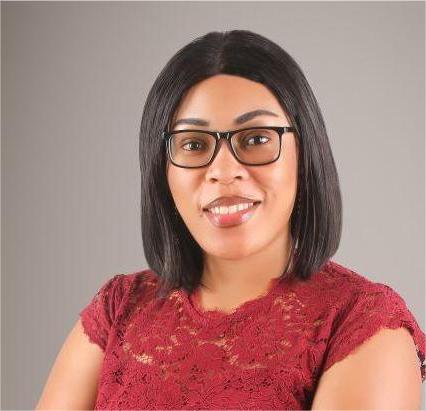
Megang is a doctoral candidate in the MSCA Digital Doctoral Network, specializing in agent-based modeling applications for sustainable finance analysis. They hold a BSc in Mathematics and dual master's degrees in Financial Mathematics and Data Science for Business. Their current research focuses on developing computational models to understand complex interactions within sustainable financial systems, bridging quantitative finance with environmental and social impact considerations.
Megang brings a unique interdisciplinary perspective to their work, combining mathematical rigor with practical business applications and cutting-edge data science methodologies. Their research contributes to the growing field of sustainable finance by providing novel analytical frameworks for understanding market dynamics and stakeholder behaviour in environmentally and socially responsible investment contexts.
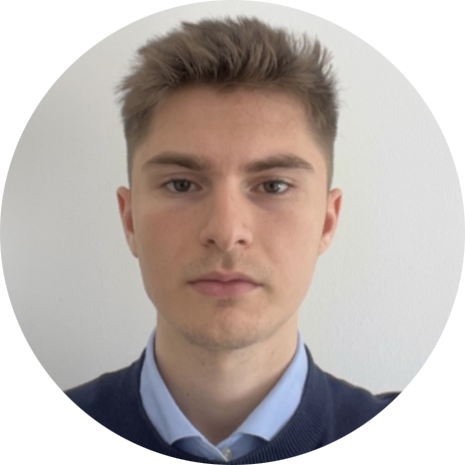
Andrei Theodor is a Ph.D. researcher at the Bucharest University of Economic Studies, where his doctoral research focuses on the application of large language models in forecasting digital asset returns. He holds an MSc in Applied Statistics & Data Science from the same institution and professionally he is a market analyst. He's also a researcher at the Institute of Digital Assets, a global research and education institution dedicated to the study of digital assets and their integration into the economy and society. His professional interests lie at the intersection of digital and traditional finance, with a specific focus on applying quantitative methods to problems of forecasting and risk management.

David Siang-Li Jheng is a PhD candidate at the Doctoral School of Cybernetics and Economic Statistics, Bucharest University of Economic Studies, Romania. His research focuses on detecting anomalies and modeling dependence structures in high-dimensional, high-frequency financial data.
With a background in financial engineering and mathematics from National Yang Ming Chiao Tung University (NYCU) and National Taiwan Normal University (NTNU), he investigates systemic risks through advanced methodologies such as Financial Risk Meters and anomaly detection models.